
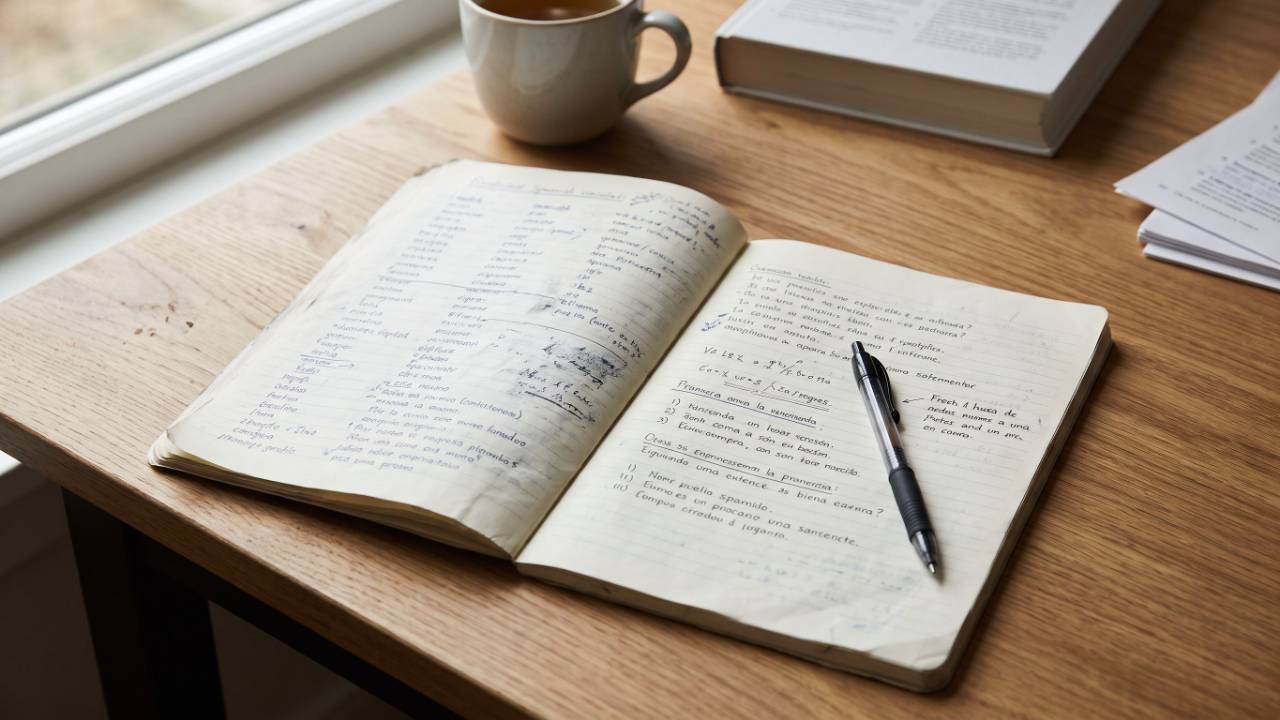
How to Get Back into Spanish After a Long Break
Nov 02, 2026You used to know a fair bit of Spanish. Perhaps you could talk about your weekend, order dinner or even hold a decent conversation. Then life happened, and Spanish quietly disappeared from your routine.
Now you'd like to pick it up again. But where do you start? Back to lesson one? Another beginners' course?
Not necessarily.
Getting back into Spanish is less about starting from scratch and more about discovering what you still know, what you've forgotten and how to put those skills back to work.
You probably haven't forgotten all your Spanish
When you stop using a language, not everything disappears at once.
You might understand a Spanish text but struggle to write a few sentences yourself. Or recognise vocabulary when you hear it, yet find that the same words escape you when you need them.
Recognising something and remembering how to use it are different skills.
For example, you might understand Fui a Madrid el verano pasado perfectly well, but hesitate when trying to describe your own last holiday.
That doesn't necessarily mean you need to relearn every Spanish verb tense. Some knowledge may still be familiar but difficult to retrieve. Other things might need more substantial revision.
The trick is finding out which is which.
Find out what you still know
Before opening the first chapter of a grammar book, try three simple activities using Spanish that was once comfortable for you.
-
Read something short. Choose a text about an everyday topic. Can you understand the main ideas? Which words or structures feel familiar?
-
Listen to everyday Spanish. Find a short recording. Can you identify the situation and follow the main points, even if you miss some details?
-
Write a few sentences. Describe your routine or what you did last weekend, without checking your notes. What comes naturally? Where do you get stuck?
This isn't a formal level assessment. It's simply a way to see what you can still understand, what you can use and what needs attention.
You might be pleasantly surprised. You might also discover some spectacular gaps. Both are useful information.
Don't revise everything. Start with what you need
Starting again from lesson one can feel reassuring, but it isn't always the best use of your time.
Instead, focus on the areas that are making it difficult to use your Spanish.
If you can talk about your daily routine but struggle to describe past experiences, revisit the past tenses. If everyday words keep escaping you, revisit vocabulary connected to your own life. If reading feels comfortable but listening is difficult, give listening more attention.
And don't just reread explanations.
After revising a grammar point, complete a few exercises, find it in a short text and try using it yourself. After reviewing vocabulary, practise recalling the words rather than simply looking at them again.
The aim is to move gradually from recognising Spanish to being able to retrieve and use it.
Your first two weeks back
One of the easiest mistakes is to plan an ambitious new study regime before you've even started.
An hour every day. Five grammar topics a week. Fluency by Thursday.
Perhaps something more realistic?
Week one: reconnect
Keep your sessions short and work with familiar material. Read a little, listen to something manageable and revisit one or two grammar points.
Pay attention to what's easier than expected and what still needs work.
Your goal isn't to recover your old level in seven days. It's to get comfortable with Spanish again.
Week two: find your rhythm
Choose one or two areas that need attention and practise them in different ways.
For example, combine a short grammar review with interactive exercises, reading or listening. Try writing a few sentences using what you've revised.
Ten or fifteen minutes might fit into a busy day. Sometimes you'll have thirty. You don't need to practise every day for the return to be worthwhile.
What matters is finding a routine you can realistically maintain.
If you're unsure how much time to set aside, our article How Much Spanish Should You Practise Every Day? explores what makes a realistic practice schedule.
And if you've only got a few minutes, What Should You Practise When You Only Have 10 Minutes for Spanish? offers some practical ideas.
You don't need to recover everything overnight
When you return to Spanish, it's tempting to compare yourself with the level you once had.
But your previous level doesn't have to be a deadline.
Some things will come back quickly. Others will need more practice. And you might discover gaps that were there long before you stopped studying.
Rather than trying to recover everything at once, start with what you know, rebuild what you've forgotten and give yourself time to use Spanish again.
You're not starting from nothing. You're starting from experience.
